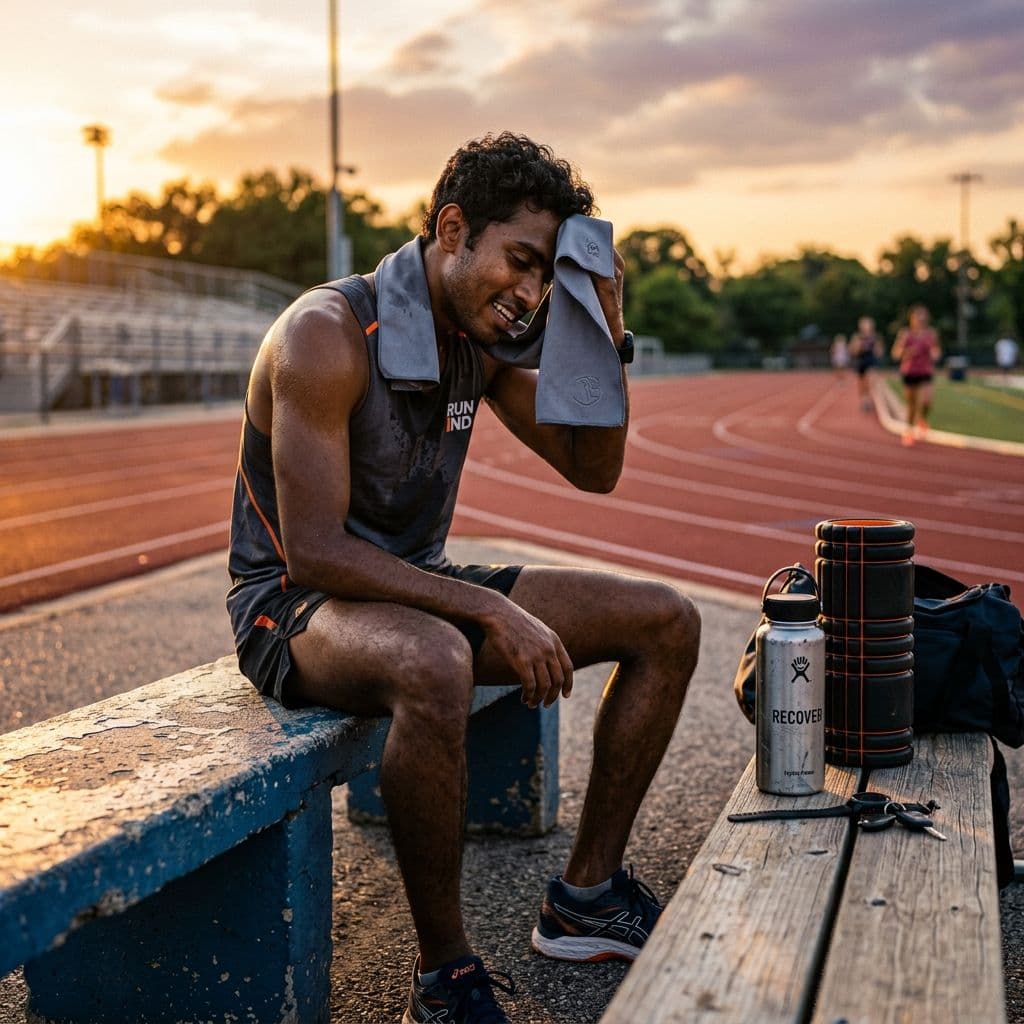
Ultimate Guide to Sports Recovery: How to Prevent Injuries for Amateur Athletes in India (2026)
You pushed hard during your weekend football match on the turf, or crushed your personal best in a 10k run on the local track. You feel fantastic, riding the high of endorphins. But the next morning, your muscles scream in protest as you try to get out of bed. Sound familiar?
For millions of amateur athletes across India playing sports like cricket, badminton, football, and running, the focus is entirely on the training: lifting heavier, running faster, and playing harder. However, the real magic—the actual muscle growth, speed enhancement, and fitness adaptation—happens when you rest. Without proper recovery, you risk overtraining, burnout, and serious injuries that can keep you off the field for weeks.
In 2026, sports science has proven that a well-structured recovery protocol is just as important as your workout routine. Here is your ultimate guide to sports injury prevention in India and the most effective muscle recovery techniques for athletes.
The Science of Muscle Recovery
When you exercise intensely, you create microscopic tears in your muscle fibers. It sounds alarming, but this micro-trauma is a natural and necessary process for building strength. Your body repairs these tears, fusing muscle fibers together to form new protein strands, making the muscles stronger and more resilient than before (a process known as muscle hypertrophy).
Crucially, this repair process only happens during recovery.
Skipping recovery days doesn't make you tougher; it makes you weaker. Chronic fatigue leads to a breakdown in biomechanical form. When your form breaks down, you overcompensate with smaller stabilizing muscles, which is the leading cause of common sports injuries like sprains, strains, tendonitis, and stress fractures.
Overtraining vs. Healthy Fatigue
Before looking at recovery tools, you need to understand the difference between healthy workout soreness (Delayed Onset Muscle Soreness or DOMS) and overtraining syndrome symptoms.
Healthy Fatigue (DOMS):
- •Muscle soreness that peaks 24 to 72 hours after a new or intense activity.
- •The muscle feels stiff or tender to touch but functions normally after warming up.
- •You still have the mental energy and motivation to work out.
Overtraining Syndrome:
- •Persistent muscle and joint pain that doesn't go away with rest.
- •A noticeable drop in athletic performance and loss of strength.
- •Elevated resting heart rate (a sign your central nervous system is stressed).
- •Insomnia, mood swings, irritability, and chronic fatigue.
- •Frequent illnesses or minor infections, indicating a suppressed immune system.
If you are experiencing overtraining symptoms, you need immediate passive recovery and rest.
Active vs. Passive Recovery: What Indian Athletes Need to Know
There are two main categories of recovery. A balanced athletic schedule incorporates both.
Passive Recovery
This is complete, unrestricted rest. Think sitting on the couch, reading a book, or getting a good night's sleep. Your body is doing zero strenuous work, allowing your central nervous system (CNS) and muscle tissues to focus entirely on repair.
Active Recovery Exercises
Active recovery exercises involve low-intensity, low-impact movements designed to increase blood flow without putting additional stress on your joints or muscles. Increased blood circulation helps flush out metabolic waste products (like lactic acid) and delivers oxygen and nutrients needed for rapid repair. Examples: A light 20-minute walk in the park, a gentle swim in the local pool, cycling at a conversational pace, or a restorative yoga (Hatha or Yin) session.
Top 5 Muscle Recovery Techniques for Athletes
You don't need to be an Olympic athlete to recover like one. Here are the most effective recovery methods you can implement today:
1. Foam Rolling and Myofascial Release
Using a foam roller for 10-15 minutes post-workout helps break up fascial adhesions (muscle knots) and improves tissue elasticity. Target your calves, IT bands, quadriceps, and upper back. While it can be slightly uncomfortable, regular foam rolling is one of the best DOMS recovery tips available.
2. Contrast Water Therapy (Ice vs. Heat)
Switching between cold and warm water stimulates blood circulation. The cold water constricts blood vessels (reducing inflammation and numbing pain), while the warm water dilates them (flushing out waste). Try alternating 1 minute of cold water with 2 minutes of warm water in the shower for 3-4 cycles after a hard game.
3. Percussion Therapy (Massage Guns)
Massage guns have become highly accessible in India. These devices use rapid, percussive strokes to stimulate blood flow and relax tight muscles. They offer many of the same sports massage benefits from the comfort of your home. Use them on a low setting on sore muscles for 2 minutes per muscle group.
4. Dynamic Stretching & Yoga
While dynamic stretches (like leg swings) are best before a workout, static stretching and Yoga are perfect for after. Holding stretches like the Pigeon Pose or Downward Dog for 30-60 seconds maintains flexibility, improves your range of motion, and prevents the muscle stiffness that leads to injuries.
5. Compression Garments
Compression socks or tights gently squeeze the muscles, which promotes venous return (blood flowing back to the heart). Many long-distance runners in India swear by compression socks to reduce lower-leg fatigue and swelling after long runs on hard asphalt.
Nutrition for Muscle Repair: Best Post-Workout Meals in India
What you consume after a workout is just as important as the workout itself. For optimal muscle protein synthesis, the golden rule is a 3:1 ratio of carbohydrates to protein consumed within 45 to 60 minutes of finishing your session.
Hydration for athletes in India: Before considering food, address your fluid loss. The intense Indian heat causes massive sweat and electrolyte depletion. Rehydrate with water, natural coconut water (an incredible source of potassium), or homemade nimbu pani (lemon water with a pinch of rock salt and minimal sugar).
The Best Indian Post-Workout Meals:
- •Protein for Repair: Protein provides the amino acid building blocks necessary to rebuild muscle fibers.
- •Vegetarian: A large bowl of thick moong dal, paneer bhurji (scrambled cottage cheese), Greek curd with nuts, or a scoop of high-quality whey protein isolate.
- •Non-Vegetarian: 3-4 whole boiled eggs, grilled chicken breast with spices, or a fish curry cooked in minimal oil.
- •
- •Carbohydrates for Energy: Carbs replenish your glycogen stores (your muscle's primary energy reserves).
- •Healthy Indian Carbs: Sweet potatoes (shakarkandi), bananas, a bowl of white rice, or overnight oats.
- •
Example Meal: A bowl of white rice with thick chicken curry or paneer tikka, accompanied by a banana and a glass of buttermilk (chaas).
How to Prevent Common Sports Injuries in India
Understanding how to protect vulnerable joints based on your specific sport can keep you playing for decades.
Knee Injuries (Running, Football, Tennis)
Runner's knee (Patellofemoral pain syndrome) and ACL strains are incredibly common. How to prevent knee injuries in running: Strengthen your glutes, hamstrings, and quadriceps. Strong leg muscles absorb the shock of impact so your knee joints don't have to. Incorporate exercises like Bulgarian split squats, glute bridges, and Romanian deadlifts. Always ensure your running shoes provide adequate support and aren't overly worn out.
Shoulder & Elbow Injuries (Cricket, Badminton, Swimming)
Rotator cuff tendonitis and "Tennis Elbow" plague overhead athletes. How to recover from badminton injuries: The shoulder is highly mobile but unstable. Strengthen the rotator cuff using light resistance band exercises (external and internal rotations). Always perform a thorough dynamic warm-up involving arm circles and band pull-aparts before stepping onto the badminton court or picking up a cricket ball.
Ankle Sprains (Basketball, Football)
Lateral ankle sprains happen when you roll your foot on an uneven surface or land awkwardly. Prevention: Wear sport-specific shoes with proper lateral support (don't play basketball in running shoes). Improve your proprioception and balance by doing single-leg stands on a soft surface (like a pillow or Bosu ball) for 60 seconds per leg.
The Power of Sleep for Muscle Growth
You can have the most dialed-in diet and use all the latest recovery gadgets, but if you aren't sleeping, you aren't recovering. Sleep for muscle growth is not a myth; it is a biological necessity.
During the Deep Sleep (Slow-Wave Sleep) phase, your pituitary gland releases roughly 70% of your daily Human Growth Hormone (HGH). HGH is the master hormone for tissue repair and muscle building. Furthermore, lack of sleep spikes cortisol (the stress hormone), which actively breaks down muscle tissue and promotes fat storage.
Aim for 7 to 9 hours of quality, uninterrupted sleep per night.
- •Keep your bedroom cool and pitch black.
- •Limit blue light exposure (phones, TVs) an hour before bed.
- •Maintain a consistent sleep schedule, even on weekends.
Frequently Asked Questions
Q: Are ice baths really effective? A: Ice baths (cold water immersion) reduce inflammation and numb soreness temporarily. They are excellent for quick turnarounds (like playing back-to-back cricket matches in a weekend tournament). However, if your primary goal is long-term muscle hypertrophy (growth), excessive cold therapy immediately after lifting weights can actually blunt the adaptation process.
Q: Should I take painkillers for normal muscle soreness? A: It is generally advised to avoid NSAIDs (like Ibuprofen) for standard DOMS. Inflammation is the first step in the healing cascade. By suppressing it artificially, you can interfere with the natural inflammatory process your body relies on to repair muscles. Stick to natural recovery methods like active rest and hydration.
Q: How often should I take a full rest day? A: It depends on your training intensity and experience level, but a general rule is to have at least one to two full passive rest days (or active recovery days) per week. If you feel constantly exhausted or your performance drops over multiple sessions, you need more rest.
Recovery isn't an afterthought or a luxury; it is a critical component of any successful training program. Treat your rest days, nutrition, and sleep with the exact same respect and dedication you give your heavy lifting or long running days. Your body will thank you, your injury risk will plummet, and your athletic performance will soar.
Join the conversation and share your favourite recovery tips with the Sport I Play community today!
Sport I Play Team
The Sport I Play editorial team — passionate sports enthusiasts covering technique tips, fitness guides, and sports stories.